
Hello! My name is Ruby, and I use the pronouns they/them in English and elle in Spanish. I wanted to document my experience as an out and proud trans person living abroad and also someone who uses the emerging pronoun: “elle.” Many Spanish speakers similarly use the pronoun in the same way many English speakers use “they,” to signify that one’s gender identity is non-conforming or outside of the binary.
Another reason I wanted to document my experience is that I have been using the pronouns they/them/theirs exclusively for almost 7 years now, and I still avoid advocating for myself when I am misgendered, out of a fear that it would create conflict or discomfort. To advocate for myself in my second language is an even bigger task, but I hope the practice will carry into my life back home as well.
I chose this program, Mexican Studies and Spanish Immersion in Querétaro, specifically because I wanted to focus on my language skills while abroad! I am a Spanish minor, and I’ve been studying Spanish since middle school, yet this is my first time needing to use Spanish in many different contexts every day. I am studying Spanish not only because it is a personal interest/goal of mine to learn a second language, but also because it goes hand in hand with my major, elementary education, which needs more teachers who can communicate with students and families that speak languages other than English at home and in their community.
To be perfectly honest, I had planned to do more research about queerness and transness in Queretaro before I left, but then I connected with my host family and what had seemed so daunting and unfamiliar became not only manageable, but something I could even see deepening my connection to my host family. Over WhatsApp, while I was still in the U.S., my host mom asked me to help her learn how to use elle and assured me that she would do her best to learn and refer to me as I want to be referred to. I could already feel her support and her openness to receive me just as I am. When I got to Querétaro, my family was immediately warm and welcoming, and even on day one I felt like part of the family. My host mom had taken extra care to teach my host siblings what she could about the pronoun “elle” and how to conjugate descriptor words to have a gender neutral ending instead of a masculine or feminine one. My host siblings, who are 6 and 10, are also very understanding, and we all made jokes conjugating random words to have the gender neutral ending. Again, I felt at home.
In group settings I am still often referred to as part of “chicas” or “compañeras,” which is the feminine form, but I really don’t mind much. For me, what matters more is not which pronouns I use, but rather that the people close to me understand and appreciate me and my identity. I am so excited and grateful to have this experience and to get to experience life outside of my comfort zone, with a kind and understanding family to come home to at the end of each day.
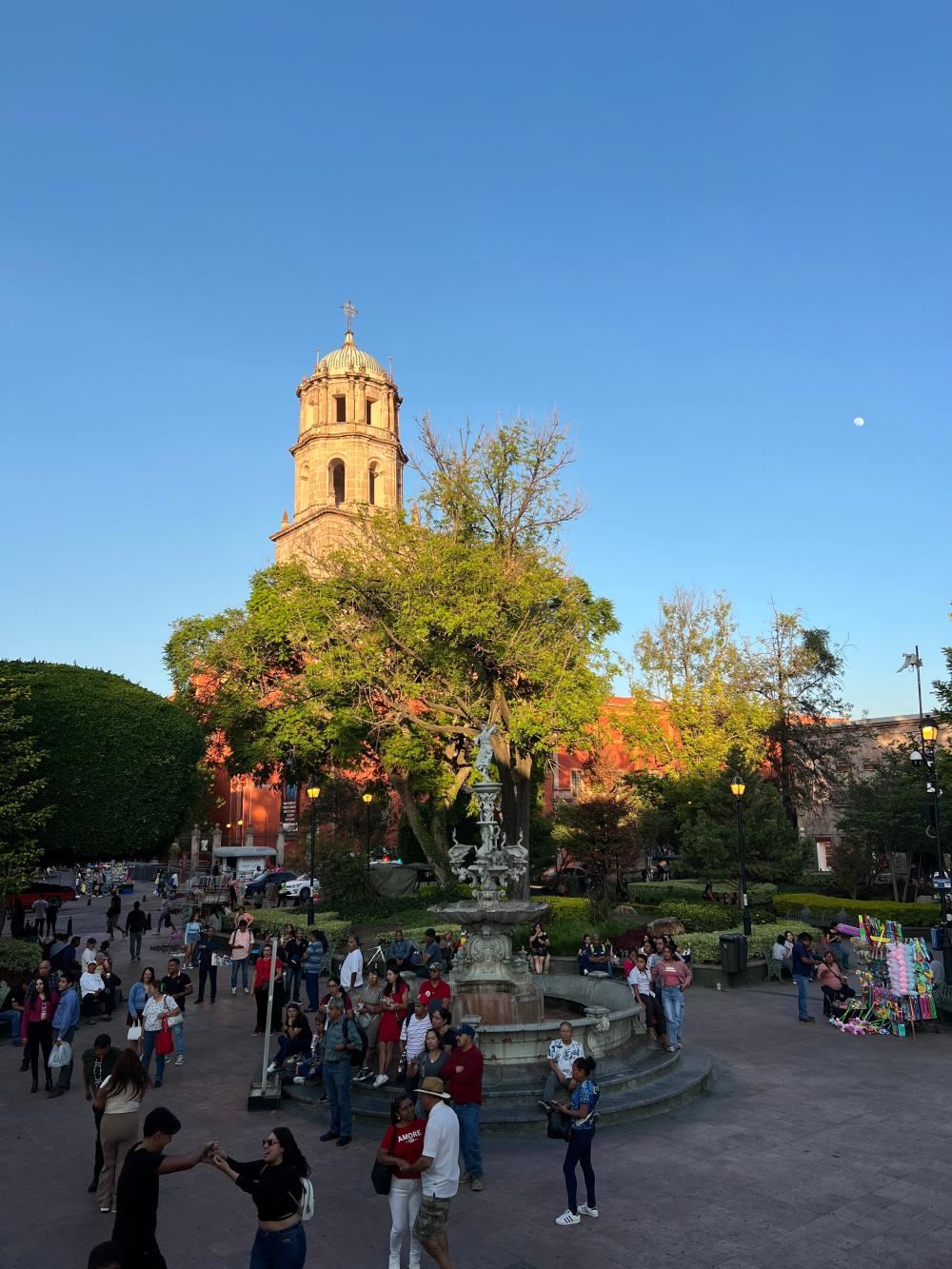
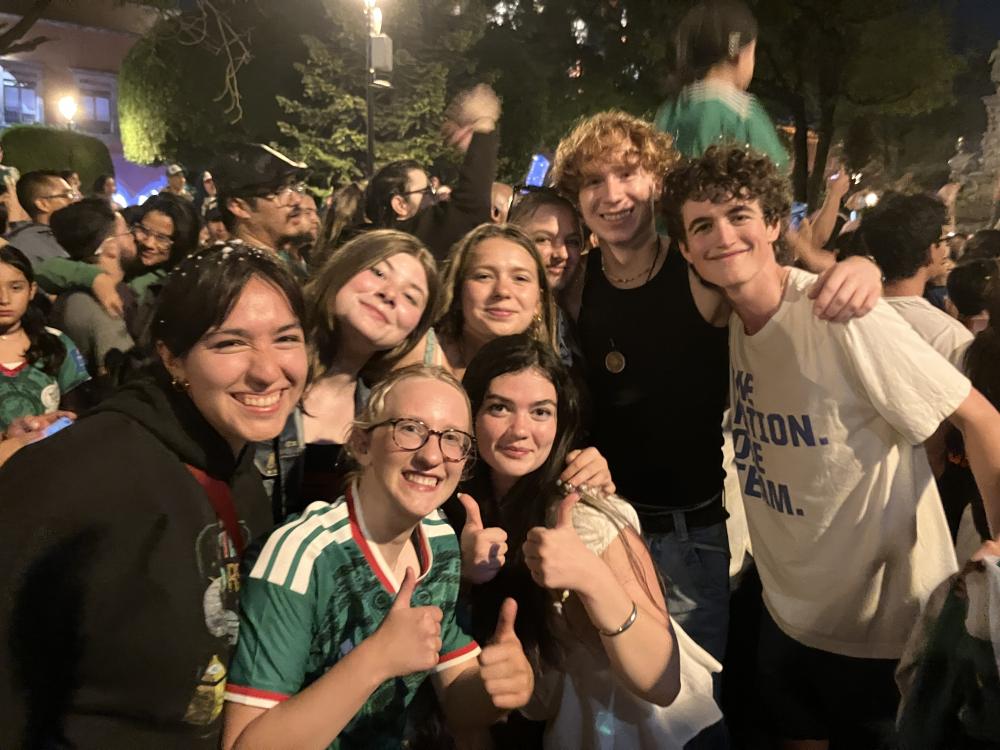
Ruby Samuels-Ellingson, Diverse Ducks Ambassador
Mexican Studies And Spanish Immersion In Querétaro