
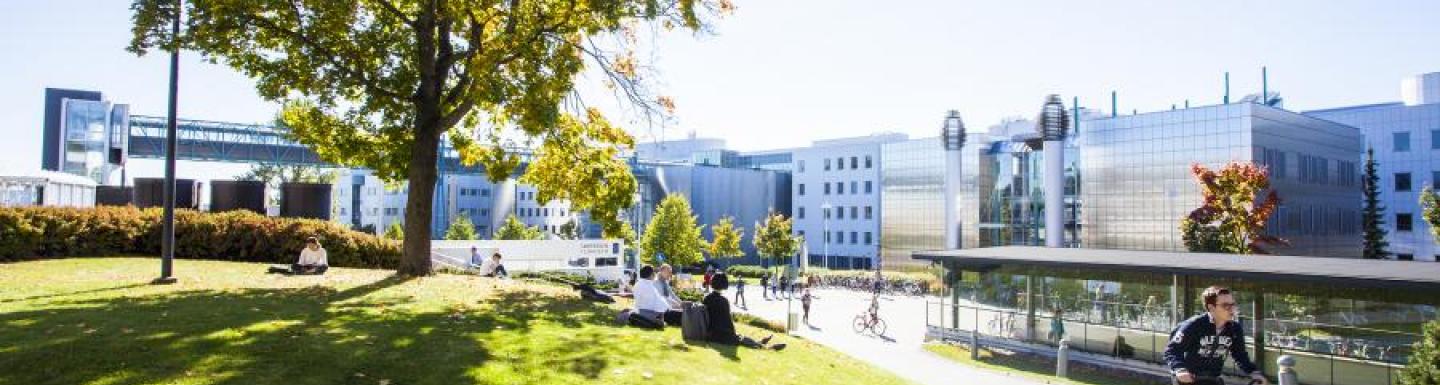
Study abroad as an exchange student in Finland! In this exchange program you will enroll directly in courses at Tampere University, the second largest university in Finland. There are three campuses across the city of Tampere:
- City Centre campus (humanities, social sciences, and languages)
- Kauppi campus (biotechnology courses)
- Hervanta campus (engineering, architecture, and computer science courses)
Visit the TAU wesbite to learn more about Tampere's multiple campuses (opens in new window).
There are many opportunities and support services available to exchange students, such as academic advising and counseling. Additionally, a student tutor is assigned to all exchange students. Your tutor is a fellow student who has volunteered to help you during your first weeks. There is also a great exercise facility, called SportUni (opens in new window) that provides high-quality, versatile and equal sports services for university students.
Exchange students are encouraged to get a Finnish student card which provides access to Student Union services and special student benefits. In addition, the student card gets you significant discounts on trains, long distance bus fares, and buffet-style lunches for 3€ at campus restaurants.
Tampere, a city of green parks and clean water, lies on an isthmus between two lakes, on the banks of the Tammerkoski rapids. Once a center of industry, textile and paper manufacturing, Tampere is now the hub of the IT industries. The largest inland city in the Nordic countries, Tampere offers many cultural attractions, including theater, film, music festivals and museums, as well as an adventure park consisting of seven attractions: Aquarium, Planetarium, Observation Tower, Art Museum and children’s zoo.
Exchange programs differ from other study abroad options and require a high level of independence. University systems outside the US may differ from what you are used to at the UO, both in terms of academic structure and student services. Students most comfortable and successful in these types of programs typically have high levels of self-reliance, resourcefulness, and willingness to adapt to unfamiliar teaching styles and living arrangements.