
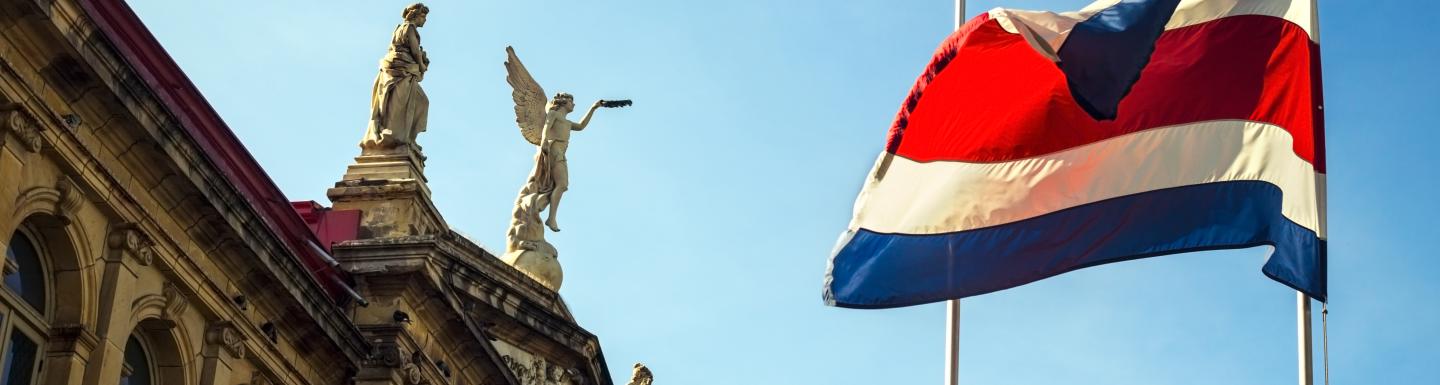
The Politics of Militarism in Costa Rica program combines Spanish language learning with upper-division Political Science coursework. Over nine weeks, you’ll build a strong cultural foundation, study Spanish, and complete two upper-division Political Science courses, all while living with a local host family.
Module I: Spanish Language and Cultural Immersion
Your program begins with a focus on cultural immersion and language development. You’ll move in with your host family (all meals provided) and take one Spanish course (5 credits) at your appropriate level—Beginner Spanish (100 level), Intermediate Spanish (200 level), or History & Culture of Costa Rica (300 level). Whether you’re a complete beginner or already have a background in Spanish, this module is designed to prepare you for understanding Costa Rica.
Module II: Politics of Militarism
In the second module, you’ll take two concurrent 400-level Political Science courses taught by Dr. Jane Cramer, a University of Oregon faculty member. During these five weeks, you will attend classes, hear from guest speakers, participate in excursions, and engage directly with the political and social contexts of the profound anti-militarism of Costa Rica and the influence of US militarism and interventionism on Costa Rica and the region.
Class Excursions
- National Museum
- Chieton Moren Fair Trade
- UPeace Campus Tour & Lecture
- Roble Sabana Women's Coffee Association
- Public Hospital Visit & Healthcare System Lecture
- Centro Civico Por la Paz Tour & Talk
- Public School Visit & Volunteering
Module III: Panama
The final week of the program takes place in Panama. You’ll stay with a Panamanian host family, learn about Panamanian culture, visit the Panama Canal, and reflect on and examine extensive US influence within Panama, explore Panama City, spend time at the beach, and complete your final academic work before the program concludes.
Additional Program Highlights:
• Two weekend excursions and several day-long trips to locations such as Ark Herb Farm, Manuel Antonio National Park, and Arenal Volcano.
• Cultural activities like traditional Costa Rican cooking and dance classes, as well as guided city tours.
