Language Requirement: None
Academic Standing by Program Start: Sophomore or above
Location: Americas, Costa Rica
GPA: 2.5

Climate Change and Restoration in Costa Rica

Jump To: 

Program Overview

The Climate Change and Restoration in Costa Rica program offers a four-week experience of coursework on climate change, environmental sustainability, and ecological restoration in Costa Rica.

During the first two weeks, you'll move into a homestay and take a Spanish language course at the 100, 200, or 300 level. The second half of the program focuses on a four-credit course, Socio-Ecological Impacts of Climate Change in Costa Rica. Through classroom instruction and excursions, you'll explore how climate change affects Costa Rica's ecosystems and communities.

For students interested in extending, the program offers two opportunities. You can complete a month-long internship with a local organization working on environmental or sustainability-related projects, or travel to Costa Rica's Pacific coast to participate in coral reef research and restoration with Costa Rica Coral Restoration. The internship or research extension will make the program 8-weeks -- see more details below!

Program Highlights:

  • Spend two weeks studying Spanish, with courses available for all proficiency levels, including beginners.
  • Explore Costa Rica's diverse ecosystems and learn about the environmental challenges facing local communities.
  • Experience Costa Rican culture through activities and a homestay experience.
  • Extend your stay with an optional month-long environmental internship or coral reef research.

Dates and Deadlines

Term Year Deadline Arrival Date Departure Date
Summer 2027 03/15/2027 06/26/2027 07/24/2027 (Optional Extension: 08/21/2027)

This program has a rolling admission application process: GEO staff (and the program faculty leader, if applicable) will complete a review of the application materials of complete applications in the order that they are submitted (“first come, first serve”). Decisions about acceptance will be made shortly after you submit a complete application. There are some programs that fill fast, some even before the deadline. Students are encouraged to complete applications and commit to programs early.

Acceptance is based on a holistic review of your application.  This includes a review of your GPA, transcripts (including courses taken and in-progress), any additional requirements or prerequisites (see section "Additional Requirements"), and the short statement.

Discount for Pell Recipients

To expand access to study abroad, GEO is offering a $500 discount for this program to UO students who currently have the Pell Grant as part of their federal financial aid (FAFSA).

Academic Details

Students will enroll in the following courses.

1. SPAN 188/288/388: Spanish Language Course (5 credits): Choose one Spanish course to take during the first two weeks of the program:

  • SPAN 188 – Beginner Spanish (100-level)
  • SPAN 288 – Intermediate Spanish (200-level)
  • SPAN 388 -- Business Spanish
    • *Prerequisite for SPAN 388: SPAN 203 or heritage speaker proficiency

Note: All Spanish courses are taught using an immersive, communicative approach in which instructors speak exclusively in Spanish — even at the beginner/survival level. This can feel challenging at first, but it typically becomes easier over time, and research shows this method is highly effective for language learners.

2. GLBL 388: Socio-Ecological Impacts of Climate Change in Costa Rica (4 credits): This course examines the multidimensional impacts of climate change on biodiversity, natural resources, and human communities. By integrating ecological research with social, policy, and economic perspectives, students investigate climate vulnerability, ecosystem resilience, and adaptation strategies across tropical and global landscapes. Through critical discussions and applied case studies, students learn to formulate sustainable adaptation frameworks and communicate climate risks effectively to diverse audiences.

3. (Optional) Extension (4 credits): Four-week extension following the core program. Students may participate in one of two internship tracks:

  • GLBL 488: Internship in Sustainable Business (4 credits): Apply classroom knowledge in a practical setting during a month-long, project-based internship, working on sustainability-focused projects with local companies. Opportunities are available in English, with projects pre-determined by the organizations. You will not know your internship location until you are in Costa Rica. Must extend stay in Costa Rica for four additional weeks to participate. 
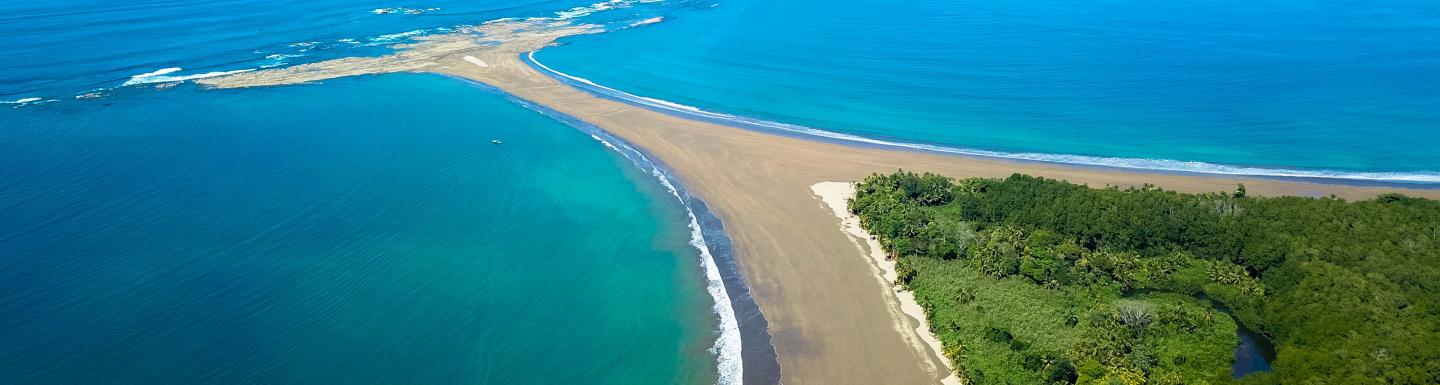
  • GLBL 488: Coral Reef Restoration (4 credits): Costa Rica Coral Restoration (CRCR) operates Costa Rica's only land-based coral conservation facility, located within Marino Ballena National Park in Uvita. The laboratory focuses on coral conservation through participatory education, the maintenance of a living genetic repository of Eastern Tropical Pacific coral species collected from nearby reefs, and asexual reproduction through fragmentation and fusion. Students will work alongside Laboratory Director and Researcher James Jacob and Lead Researcher Adriana Naranjo Arriola, contributing to long-term coral conservation research beginning in late 2026 and continuing through 2028. Through regular monitoring and long-term data collection, the study aims to document coral performance under existing laboratory conditions and provide information relevant to future conservation and restoration efforts. In addition to research, students will learn how a land-based coral conservation facility operates in a relatively remote coastal setting. This includes aquaculture system management, water quality monitoring, coral husbandry, and the challenges of maintaining a conservation laboratory with limited access to specialized resources. Limited availability - maximum 6 students 

Course Equivalencies

UO students: please refer to the UO Course Equivalency Process and the UO Office of the Registrar Course Equivalency Database.

Non-UO students: Actual credit awarded is determined by the relevant department at your university in consultation with the study abroad office. Check with your study abroad advisor for more information.

Faculty and Staff

Janiva Cifuentes-Hiss – Director of Strategic Partnerships (Arcos Headquarters)
Janiva Cifuentes-Hiss has over 20 years of experience in study abroad designing and leading transformative programs across Latin America, Africa, and Europe. Janiva graduated from Pomona College with a B.A. in Latin American Studies and studied abroad at the University of Salamanca in Spain. She served as Costa Rica Resident Director from 2007–2020 and currently works for Arcos Headquarters where she collaborates with GEO to create immersive customized programs and internships for University of Oregon students. 

Catalina Ovares – Costa Rica Resident Director
Catalina (Cata) is a native of Atenas, Costa Rica. She is a certified naturalist guide with extensive experience leading study abroad programs in Costa Rica. She is CPR and First Aid certified and enjoys soccer, horseback riding, and adventure sports. Catalina is responsible for reservations, logistics, and "behind the scenes program" planning for GEO programs for University of Oregon students.

Angélica Pérez – Costa Rica Program Director
Angélica (Angie) is from San José, Costa Rica, and has decades of experience leading study abroad programs in Costa Rica. She is a certified bilingual tour Guide, is First Aid and CPR certified, and is trained in leading groups with disabilities. She is very knowledgeable about culture, biodiversity and natural history. Angie leads all Arcos cultural activities and excursions, and is available to support University of Oregon students abroad with health, safety, and cultural immersion. She is on-call in case of emergencies 24/7. 

Adriana Campos – Costa Rica Program Director
Adriana Campos is from Heredia, Costa Rica, and is a certified tour guide and has many years of experience in ecotourism, volunteer coordination, and environmental education. She is First Aid and CPR certified, has led workshops at the National Biodiversity Institute and is a certified children’s yoga instructor.  Adri leads all Arcos cultural activities and excursions, and is available to support University of Oregon students abroad with health, safety, and cultural immersion. She is on-call in case of emergencies 24/7. 

Housing Description

Students will be placed in groups of two to three students per homestay in Heredia, Costa Rica. Homestays provide three meals a day and are conveniently located within walking distance of each other and the classrooms. All but two meals will be provided each month, but students will likely want to go out to restaurants for a few nights on their own.

This arrangement offers students the opportunity to immerse themselves in the local culture, practice their Spanish language skills in a real-world setting, and experience the warmth and hospitality of a “Tico” family. Homestays also provide a safe and supportive environment, helping students to fully engage with their surroundings and make the most of their study abroad experience.

Program extension: Students doing the Sustainable Business internship should expect daily commute times to vary depending on placement location and may include bus, train, walking, or a combination of these. All transportation costs, including bus, train, or taxi fares, are the responsibility of the student. 

For the research experience, student accommodations are planned at Hotel Bahía Azul in Uvita. The arrangement includes shared rooms with individual beds and separate sleeping arrangements by gender, subject to confirmation with the hotel.The accommodation includes three meals daily, consisting of breakfast, lunch, and dinner, including weekends. A laundry allowance will also be included.